admin
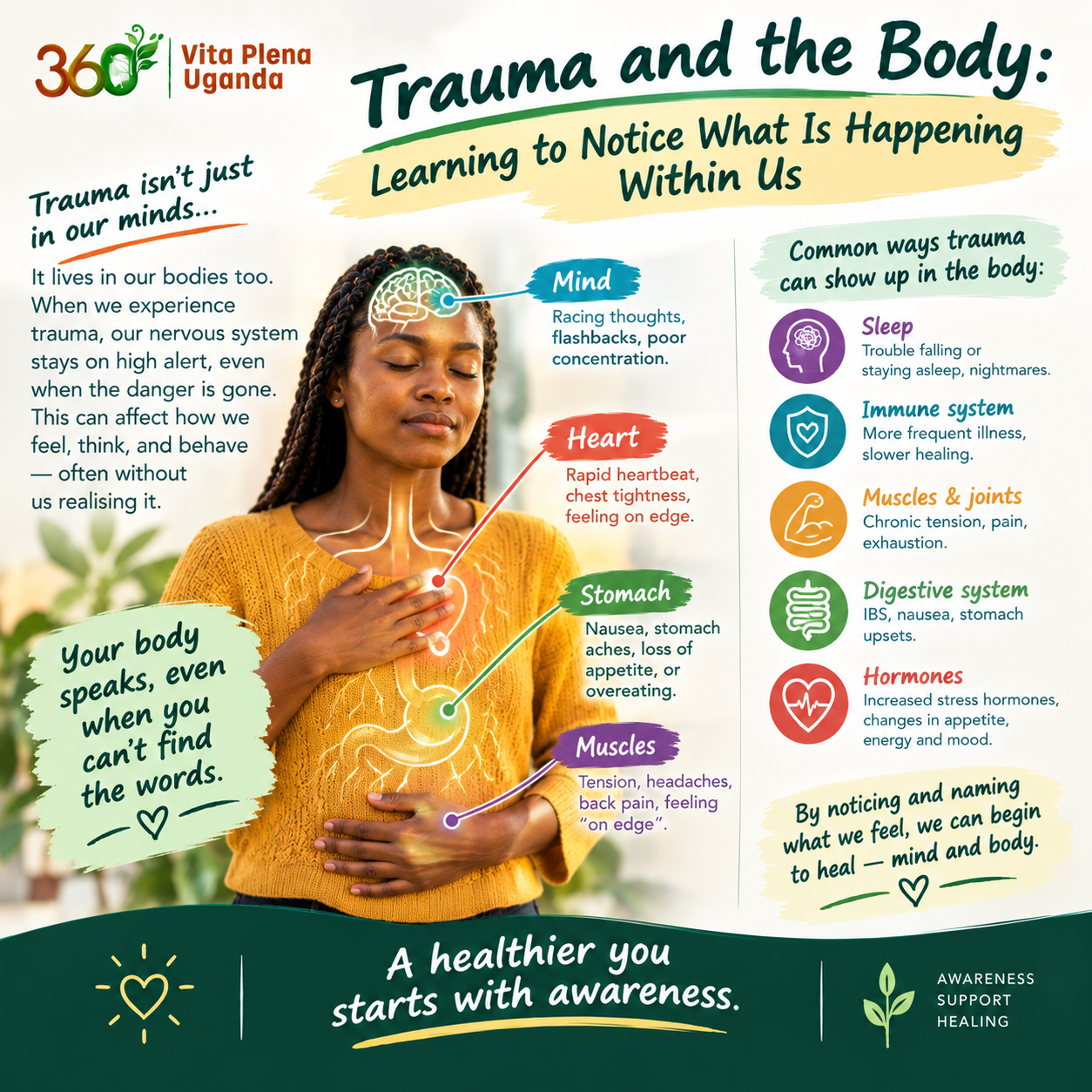
We tend to think of trauma as something that lives in the mind — in memories, in thoughts, in emotions. But trauma does not stay confined to the mind alone. It lives in the body too: in a tight chest, a clenched jaw, a racing heart, a stomach that churns before difficult conversations. Learning to notice what the body is communicating is one of the most practical, accessible steps anyone can take toward understanding themselves and toward helping others understand themselves as well.
Why the Body Remembers
When a person experiences something overwhelming, the body does not simply observe from a distance while the mind processes the event. The body is an active participant. The nervous system floods with stress hormones, the heart rate changes, muscles tense in preparation to fight or flee, and breathing shifts. In a single traumatic moment, this response is useful; it is the body doing exactly what it was designed to do to keep a person alive.
The difficulty comes afterward. For many people, especially those who have experienced trauma without the chance to fully process or resolve it, the body continues to respond as though the danger has not fully passed. Long after the original event is over, the nervous system can remain on alert, ready to react to anything that even faintly resembles the original threat.
The Brain-Body Connection
This is closely tied to how the brain itself works. The amygdala, the brain’s threat-detection centre, is connected to the body’s stress response system. When it senses danger, real or remembered, it can trigger physical changes before the thinking part of the brain, the cerebral cortex, has had any chance to evaluate whether the danger is actually present. This is why a person can feel their heart pounding, their palms sweating, or their stomach tightening in response to something that, rationally, does not seem dangerous at all. The body reacted first; the explanation comes later, if it comes at all.
How Trauma Shows Up in the Body
Unresolved trauma and chronic stress can express themselves physically in a wide range of ways, many of which are easy to mistake for unrelated health complaints:
- Tension and pain. Chronic tightness in the shoulders, neck, jaw, or back; the body staying braced, as though still preparing for impact.
- Digestive difficulties. Stomach pain, nausea, or appetite changes, especially around stress or conflict.
- Sleep disruption. Difficulty falling asleep, restless nights, or waking suddenly with a racing heart.
- Fatigue. A deep, persistent tiredness that rest does not seem to fix, often the result of a nervous system working overtime, even during quiet moments.
- Changes in breathing and heart rate. Shallow breathing, a racing pulse, or a tight chest, particularly in situations that echo past experiences.
- Physical startle responses. Jumping at sudden sounds or movements far more intensely than the situation calls for.
None of these symptoms, on their own, prove that trauma is present. But when they appear repeatedly, without a clear medical cause, they are worth paying attention to — not as something to be ashamed of, but as information.
Learning to Notice: A Skill Worth Building
One of the most valuable things anyone can learn — survivor, parent, teacher, pastor, or caregiver — is simply how to notice what is happening in the body, both their own and, with sensitivity, in others.
This does not require special training, only practice and patience. A few simple questions can help:
- What am I feeling in my body right now? (Tight chest? Clenched jaw? Shallow breathing?)
- When did I first notice this feeling today?
- Does this situation remind me of anything from my past?
- What do I actually need right now — rest, safety, connection, movement?
Simply pausing to notice, without judgment, is often the first step toward responding to the body’s signals rather than being overwhelmed or confused by them.
The same awareness can help us support people around us. A child who suddenly goes still, a teenager whose breathing quickens before a difficult conversation, a colleague who becomes physically tense when a certain topic comes up; these are not always conscious choices. They are often the body signalling that something feels unsafe. Recognising this allows us to respond with patience rather than frustration, and to create more safety rather than unintentionally adding pressure.
Why the Body Matters for Healing
Understanding the body’s role in trauma changes how we think about recovery. Healing is rarely just a matter of understanding a story intellectually or “thinking positively.” Because trauma is stored partly in the body, true healing often needs to involve the body as well as the mind.
A few gentle, widely accessible practices can help the body move out of a state of constant alert:
- Slow, deliberate breathing. Taking slower, deeper breaths signals safety to the nervous system, helping to calm a racing heart or a tight chest.
- Grounding through the senses. Noticing five things you can see, four you can hear, three you can touch, can help bring attention back to the present moment rather than a remembered threat.
- Physical movement. Walking, stretching, or other gentle movement can help release some of the tension the body has been holding.
- Rest and sleep. A body that remains on alert rarely gets the deep, restorative rest it needs; prioritising sleep, where possible, supports the whole healing process.
- Safe physical presence. For many, simply being physically near a trusted, calm person — without pressure to talk — can help the nervous system settle.
These are not substitutes for professional support when it is needed, but they are small, practical starting points available to almost anyone.
A Note on Self-Compassion
Many people who notice these physical patterns in themselves respond with frustration or self-criticism — why can’t I just relax? why does my body react this way over nothing? It helps to remember that these responses were not chosen. They were learned, often at a young age, in circumstances the person did not choose either. The body was simply trying to keep them safe, in the best way it knew how. Approaching these patterns with curiosity and compassion, rather than judgment, tends to open the door to real change far more effectively than frustration ever could.
When to Seek Additional Support
While learning to notice bodily signals is valuable for everyone, some patterns benefit from more structured support — particularly where physical symptoms are severe, persistent, or significantly disrupting daily life. In these cases, encouraging someone toward qualified medical or psychological support is an act of care, not a step back from trauma-informed support. We are not here to diagnose or decide what is happening inside someone else’s body; we are here to notice, to care, and to walk alongside them toward the help they may need.
Listening to What the Body Already Knows
The body often carries wisdom the conscious mind has not yet caught up with. A tight chest before a difficult conversation, a wave of exhaustion after an emotionally heavy week, a sudden flinch at a familiar sound — these are not random malfunctions. They are the body’s way of communicating something real.
Learning to notice, rather than ignore or override, these signals is a quiet but powerful step toward healing — for ourselves, and for the people we are called to walk alongside.