admin

Not every wound bleeds. Some of the deepest injuries a person carries are the ones no one else can see; carried quietly in the way someone flinches at raised voices, withdraws from people who love them, or struggles to trust even when trust is offered freely. This is trauma: the hidden wound behind so much of what we label as “difficult behaviour,” “mental illness,” or simply “that’s just how they are.”
So what is trauma, really?
At its simplest, trauma is what happens inside a person when an experience overwhelms their ability to cope. When the pain, fear, or loss is too much to process in the moment. It is not the event itself, but the mark that event leaves behind. Two people can go through the same situation and be affected in completely different ways, because the individual shapes trauma: their history, their support, their age, and the meaning they make of what happened to them.
Trauma is not always one big event
When people hear the word “trauma,” they often picture something dramatic, a disaster, an assault, a war. These are real and significant, sometimes described as “one big gash.” But trauma can just as easily come from a thousand smaller wounds accumulated over time. A parent who was never satisfied, a home where conflict was constant, being repeatedly overlooked or dismissed as a child. These “little t” experiences may never make headlines, but stacked together over years, they shape how a person sees themselves and the world just as powerfully as a single catastrophic event.
A hidden problem with visible symptoms
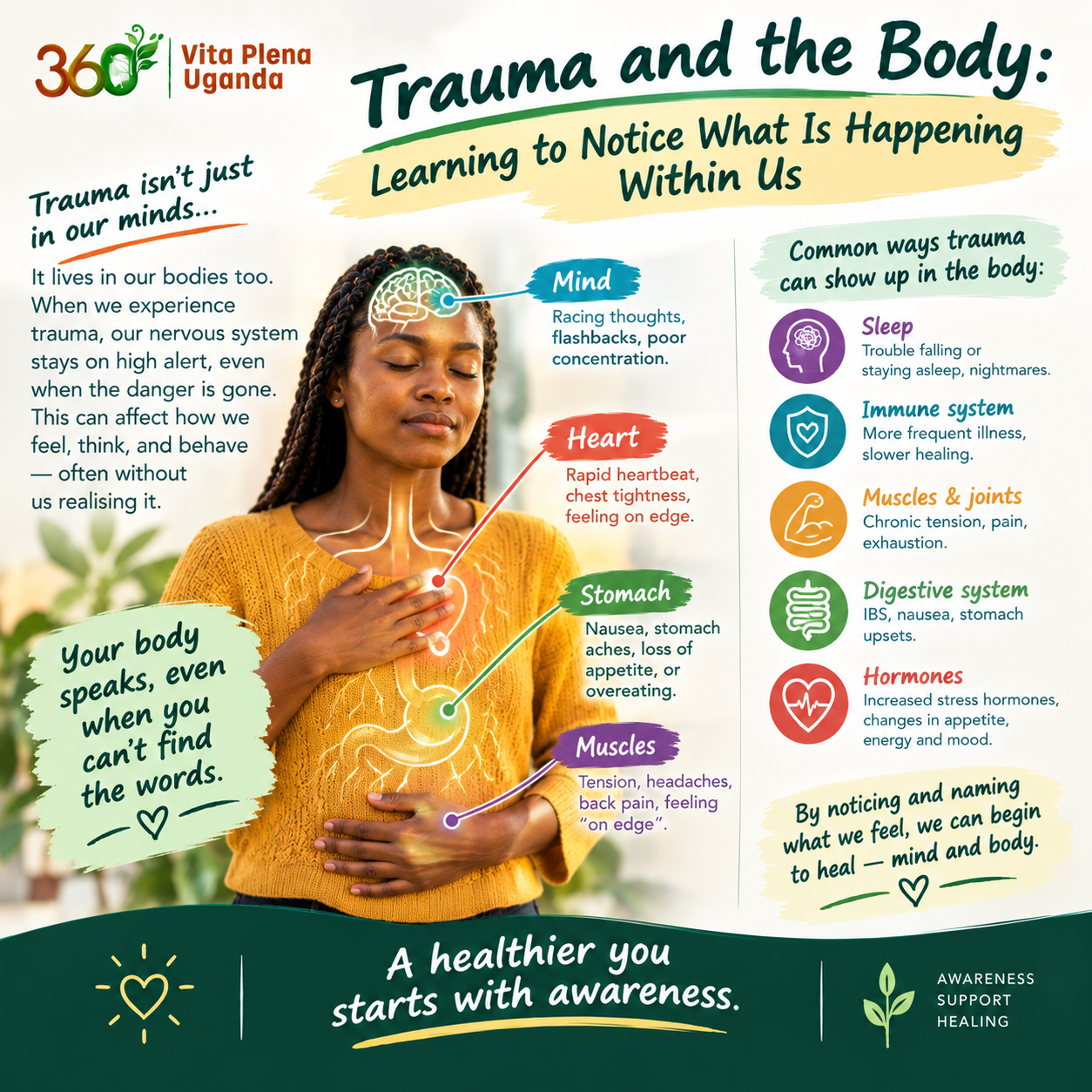
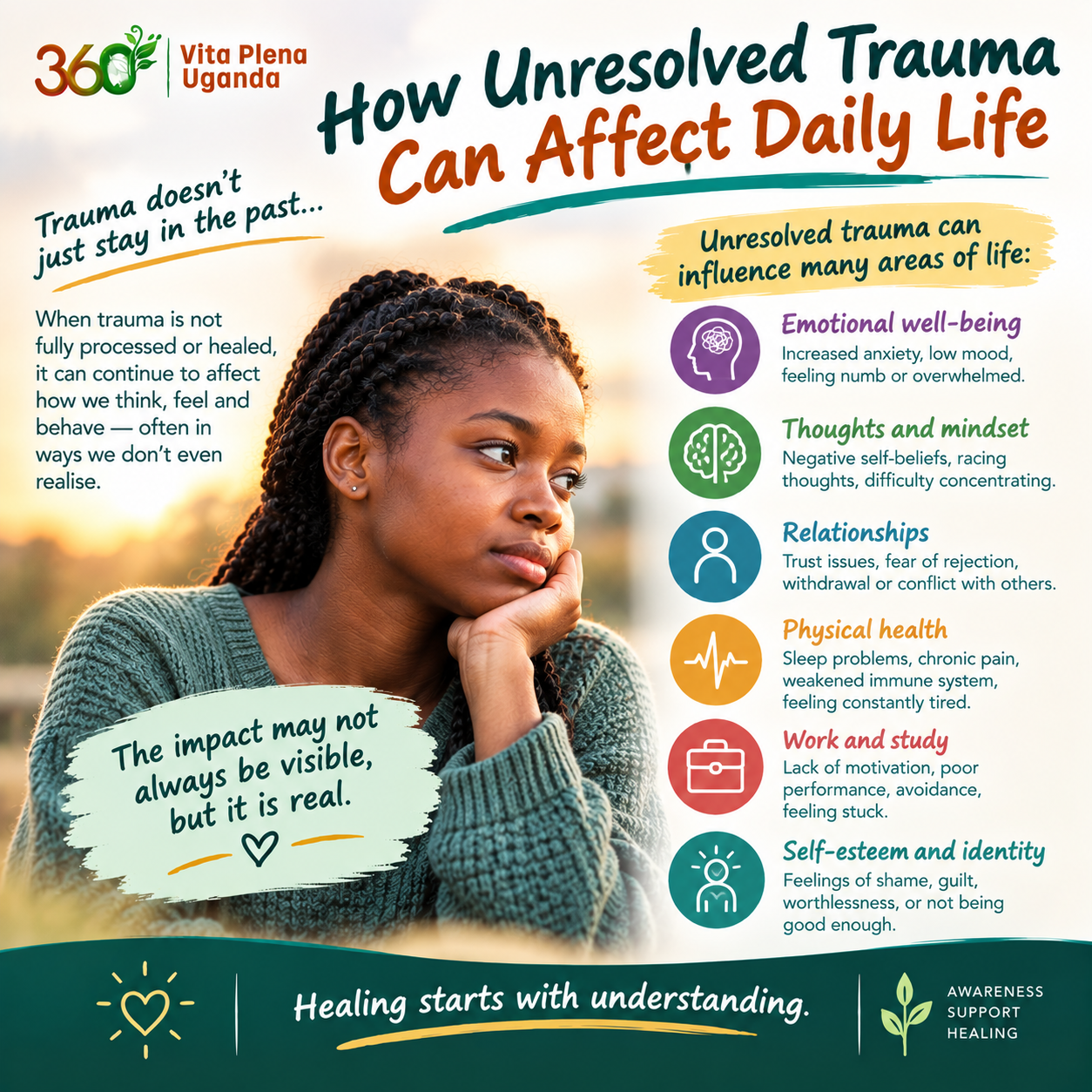
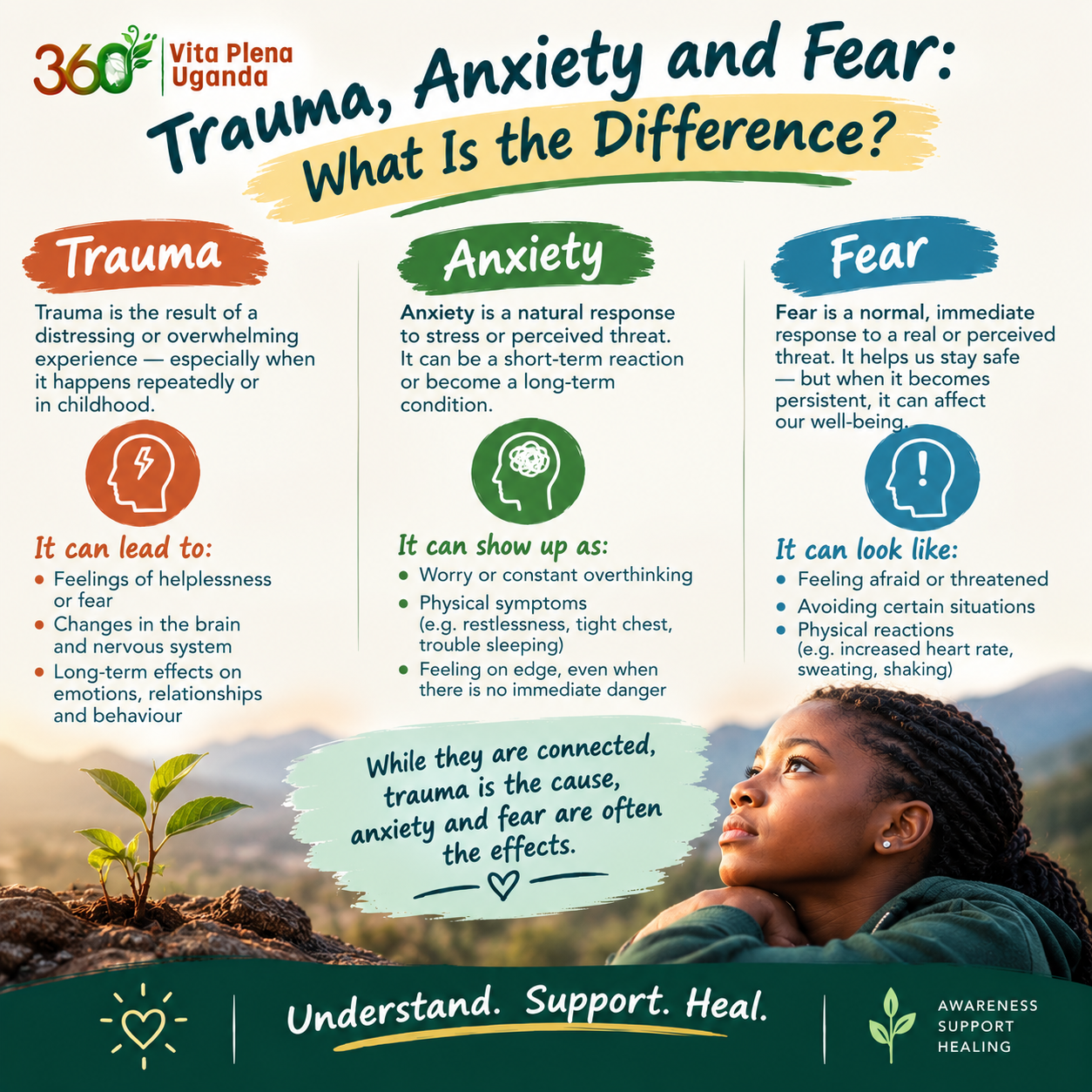
Trauma often works like this: it is the hidden, unspoken problem, while mental health and behavioural struggles are its visible outward sign. Someone carrying unresolved trauma may turn the pain inward- depression, anxiety, self-harm, suicidal thoughts or outward: in anger, aggression, or withdrawal from relationships. Neither response is the “real” problem. Both are usually symptoms pointing to something deeper that has never been safely acknowledged or healed.
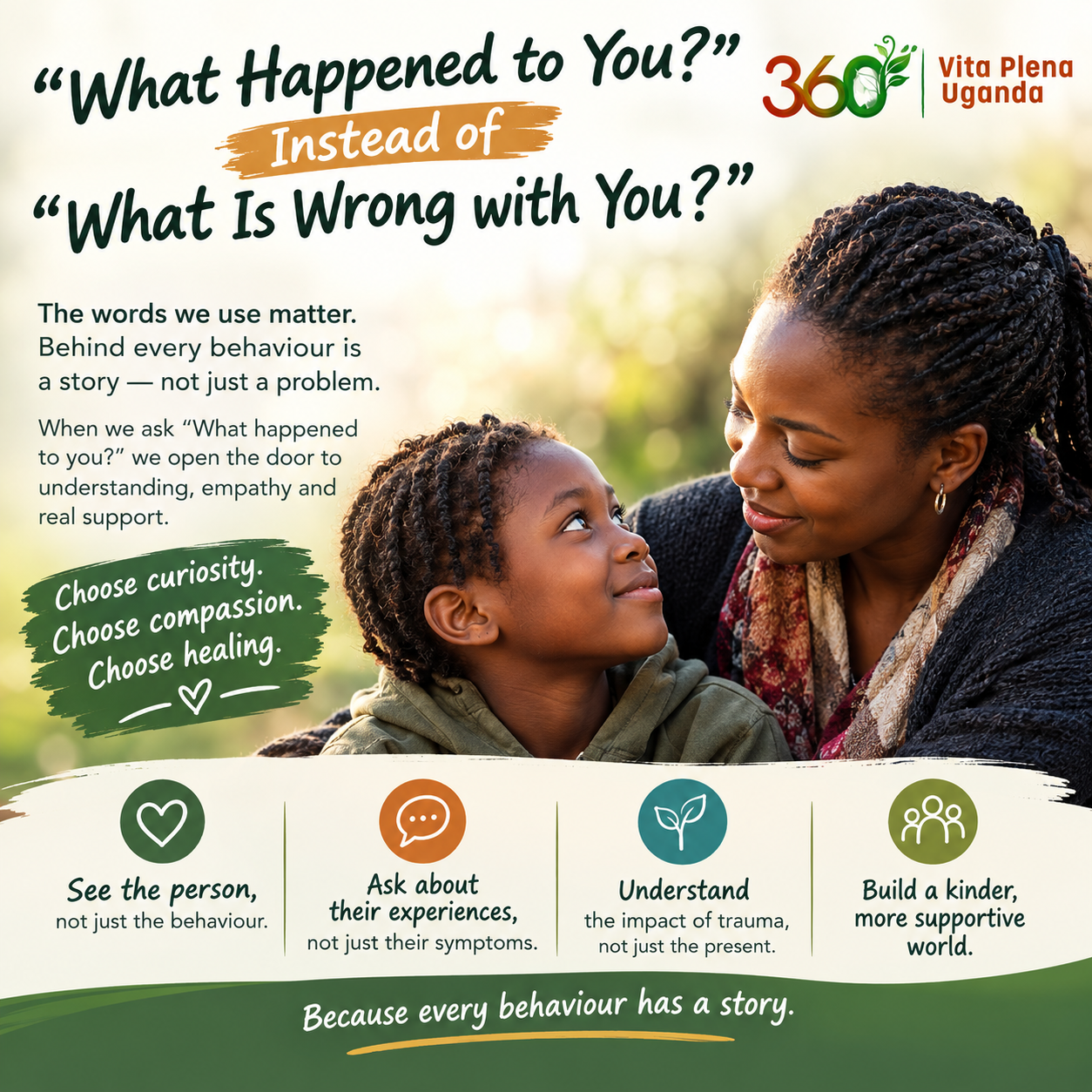
This is why a trauma-informed approach asks a different question. Instead of “What is wrong with you?” —a question that assumes fault —it asks, “What happened to you?”—a question that assumes a story worth understanding. That single shift, from judgment to curiosity, changes everything about how we respond to one another.
Trauma at every level
Trauma is not only a private, individual experience. It shows up at the community level, when a neighborhood or people-group carries a shared wound — displacement, conflict, disaster, prolonged hardship. It shows up at the national level, in the collective memory of a country. And it has a particular shape in childhood, where the developing brain is especially vulnerable to what is often called ACEs — Adverse Childhood Experiences — whose effects can echo for decades if left unaddressed.
Some trauma responses are also given clinical names: PTSD (post-traumatic stress disorder), which can follow a single overwhelming event, and Complex PTSD, which tends to develop from prolonged or repeated trauma, often within relationships where a person should have been safe. Understanding these terms is not about labelling people — it is about recognizing that their struggle has a real, identifiable cause.
Why this matters
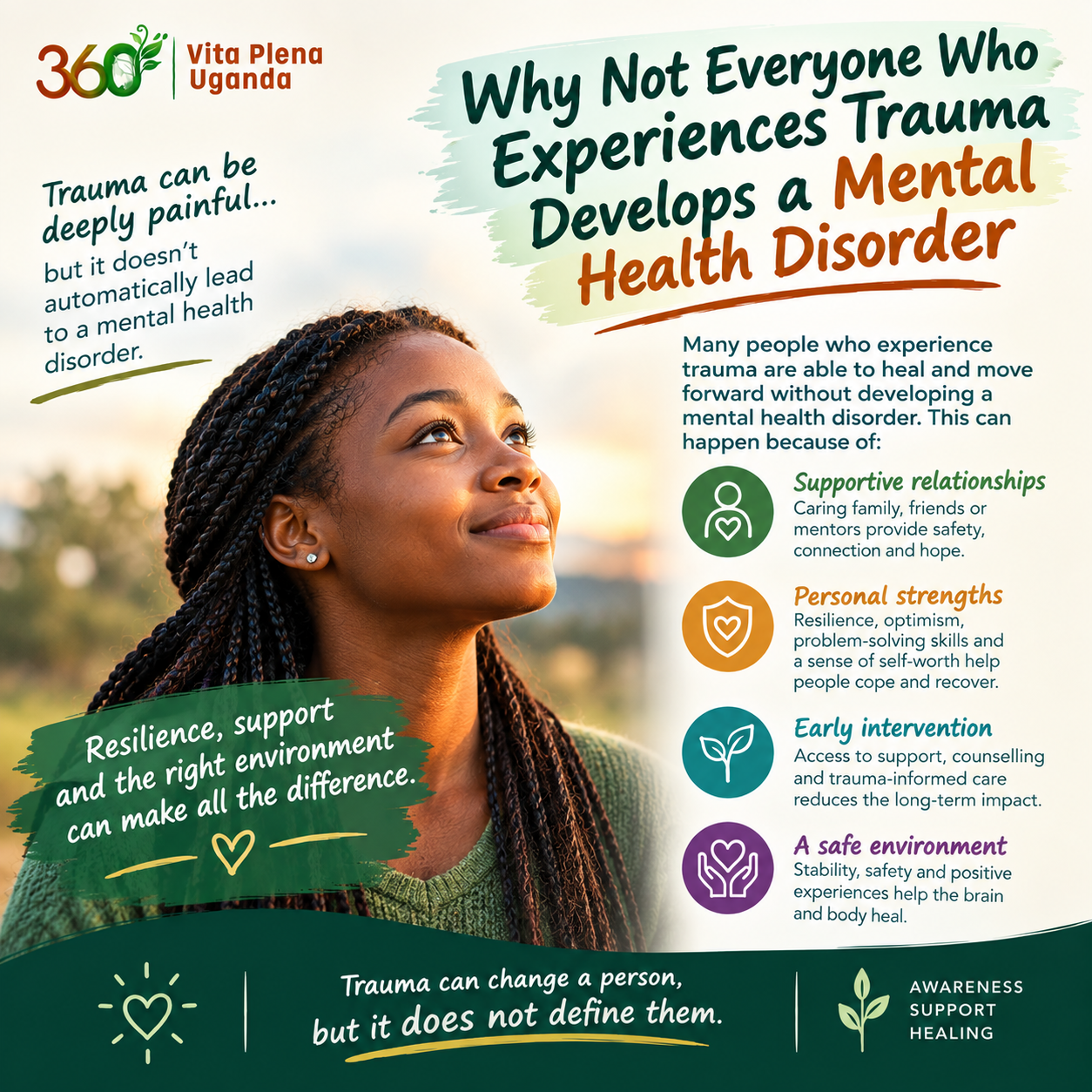
Not everyone who experiences trauma goes on to develop a mental health disorder. People are remarkably resilient, and support, safety, and connection make an enormous difference in how trauma is carried. But where trauma goes unacknowledged and unsupported, it rarely simply disappears. It tends to surface later — in relationships, in parenting, in the way a person sees their own worth — until someone, somewhere, is willing to ask the right question and listen to the answer.
Understanding trauma is the first step toward compassion — for others, and often for ourselves. It replaces judgment with empathy, and shame with the possibility of healing. That shift is at the heart of what it means to move toward a trauma-informed community: one where hidden wounds are finally given the chance to be seen, named, and healed.